Table of Contents
Why the myths of revenants (such as Rusalki) are so wide spread in different cultures around the world?
The myths of revenants, such as the Rusalki in Slavic folklore, are widespread across cultures due to several underlying anthropological, psychological, and social factors:
1. The Concept of the Unclean Dead
-
Many societies distinguish between “good” and “bad” deaths. A “bad” death—such as a violent, untimely, or unnatural one—creates social anxiety.
-
Rusalki, like many revenants, are linked to individuals who died before fulfilling their societal roles (e.g., unwed women or drowned individuals). This makes them liminal figures trapped between worlds.
2. Fear of Improper Burial and Restless Spirits
-
Many cultures believe that the souls of those who were not buried properly, or who died unjustly, cannot pass into the afterlife.
-
Similar beliefs appear in multiple traditions: Chinese hungry ghosts, Japanese yūrei, and Irish banshees all embody spirits whose death circumstances left them unable to rest.
3. Symbolism of Nature and the Seasons
-
Many revenants are tied to natural cycles, such as agricultural fertility.
-
Rusalki are associated with water, springtime, and crop fertility. Their presence during Rusalia Week symbolizes a link between life and death—where their liminal nature aids in transitioning from spring to summer.
4. Sexuality, Liminality, and Female Revenants
-
Female revenants often reflect anxieties about uncontrolled sexuality and social roles.
-
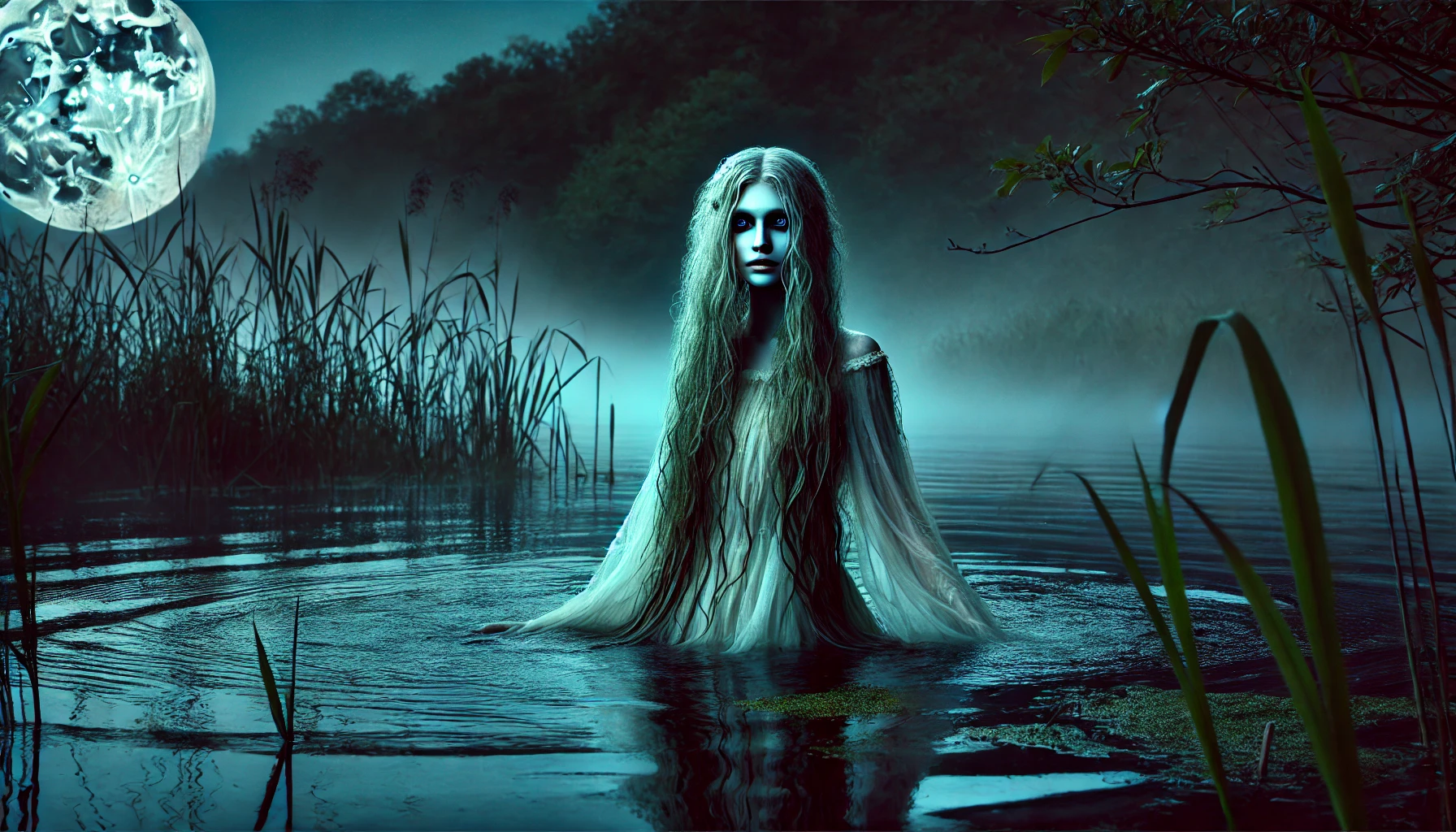
Rusalki, like many other female spirits worldwide (e.g., La Llorona in Latin America), are both seductive and deadly. They lure men with beauty but also embody tragic, unfulfilled femininity.
5. Cultural Rituals and Controlled Chaos
-
The belief in revenants allows societies to regulate and ritualize fears surrounding death and the unknown.
-
The “farewell” ritual of Rusalki (provody rusalok), where they are symbolically buried or expelled, shows an attempt to restore order by ritually acknowledging and then dismissing these spirits.
6. Christianity and Pre-Christian Beliefs
-
Many revenant myths exist at the intersection of pagan and Christian worldviews.
-
Christianity introduced the idea of resurrection and salvation, yet older beliefs in restless dead persisted, leading to hybrid mythologies where revenants exist in tension with religious doctrine.
Conclusion
The wide presence of revenants in folklore worldwide is a reflection of universal human concerns: the fear of unresolved death, the mystery of the afterlife, and the need to symbolically regulate transitional life stages (birth, marriage, death). Revenants are not just ghosts—they are social constructs that allow communities to make sense of what happens when life is interrupted before its natural course is completed.
Would you like a comparison of Rusalki with other cultural revenants?
Comparative analysis of Rusalki and similar revenant myths
1. Rusalki (Slavic Folklore)
-
Origins: Unmarried women, drowned or who died violently, often suicides.
-
Characteristics:
-
Water spirits, associated with rivers, lakes, and forests.
-
Often seductive but deadly—tickle or drown victims.
-
Appear during Rusalia Week, connected to fertility and seasonal changes.
-
-
Function in Society:
-
Expresses anxieties about female sexuality and untimely death.
-
Symbolically linked to crop fertility.
-
Rituals (provody rusalok) were performed to appease or dismiss them.
-
2. La Llorona (Latin America)
-
Origins: A woman (sometimes a mother) who drowned her children and now mourns them.
-
Characteristics:
-
Wanders near rivers and lakes, crying.
-
A warning to children—she may abduct or drown them.
-
Can appear as a ghostly figure in white.
-
-
Function in Society:
-
A moral warning about bad motherhood and uncontrolled emotions.
-
Represents the fear of infanticide and maternal grief.
-
Serves as a cautionary tale for children.
-
3. Yūrei (Japan)
-
Origins: Souls of those who died violently, with unresolved emotions.
-
Characteristics:
-
Long, unkempt black hair, white funeral robes.
-
Floats rather than walks, lacks feet.
-
Appears mostly at night, often in rain or mist.
-
-
Function in Society:
-
Highlights the importance of proper burial rituals.
-
Reflects Buddhist beliefs in karmic retribution.
-
Symbolizes the power of emotions beyond death, particularly revenge or sorrow.
-
4. Banshee (Irish Folklore)
-
Origins: A female spirit, sometimes associated with noble Irish families.
-
Characteristics:
-
Does not harm directly but wails to predict death.
-
Often appears as an old woman with long hair, sometimes combing it.
-
Can be a guardian spirit or a frightening omen.
-
-
Function in Society:
-
Connects to family heritage and death omens.
-
Represents the continuity of the family line.
-
Reflects the fear of death and fate.
-
5. Strzyga (Polish Folklore) / Vrykolakas (Greek Folklore)
-
Origins:
-
Strzyga: A person born with two souls; one remains after death.
-
Vrykolakas: A person who was excommunicated or not given a proper burial.
-
-
Characteristics:
-
More like vampires, returning from the dead to feed on the living.
-
Unlike Rusalki, they physically attack people.
-
-
Function in Society:
-
Represents fears of unclean dead and wrongful burial.
-
Reinforces the need for proper religious rites.
-
6. Pontianak / Langsuir (Malay Folklore)
-
Origins: Women who died in childbirth or were wronged.
-
Characteristics:
-
Beautiful but deadly, with long black hair and a white dress.
-
Attacks men and drinks their blood.
-
Can be repelled or pacified if given offerings.
-
-
Function in Society:
-
Expresses fears about maternal death.
-
Reinforces gender roles and morality—women must complete their reproductive role.
-
Shows a connection between revenants and female grief.
-
7. The White Lady (Western European Folklore)
-
Origins: Usually a noblewoman who died tragically (murder, suicide, lost love).
-
Characteristics:
-
Dressed in white, appears in castles or along roads.
-
Haunts a specific place, sometimes seeking revenge.
-
Often linked to love, betrayal, or family curses.
-
-
Function in Society:
-
Represents the idea of unfinished business.
-
Associated with guilt, mourning, and loss.
-
A lesson in consequences of betrayal and sorrow.
-
Comparative Analysis: Common Themes
| Revenant Type | Cause of Death | Appearance | Behavior | Social Function |
|---|---|---|---|---|
| Rusalki (Slavic) | Unmarried, untimely death (drowned, suicide) | Young, beautiful, loose hair, often naked or in white | Seductive but deadly (tickle/drown men) | Female sexuality, seasonal fertility, improper burial |
| La Llorona (Latin American) | Killed her children, suicide | Woman in white, crying | Wanders near water, wailing | Motherhood anxiety, warning tale for children |
| Yūrei (Japanese) | Unresolved emotions, improper burial | White funeral robes, no feet, long hair | Haunts people or places, often vengeful | Revenge, karmic balance, necessity of proper burial |
| Banshee (Irish) | Attached to a family, warns of death | Old or young woman, long hair, wailing | Does not attack, warns of impending death | Death omen, family heritage |
| Strzyga/Vrykolakas (Slavic/Greek) | Improper burial, excommunication | Corpse-like, vampire-like | Physically attacks humans | Fear of improper burial, religious importance |
| Pontianak (Malay) | Died in childbirth | Long black hair, beautiful but monstrous | Kills men, drinks blood | Maternal grief, gender roles |
| White Lady (European) | Murder, suicide, love betrayal | Noblewoman, dressed in white | Haunts locations, mourns | Loss, betrayal, family curses |
Key Observations
-
Untimely Death & Unfinished Business
-
Many revenants arise from improper burial (Rusalki, Yūrei, Strzyga) or unfinished social roles (Pontianak, White Lady).
-
Death before fulfilling a key social expectation (marriage, motherhood, justice) often leads to ghostly unrest.
-
-
Female Sexuality & Dangerous Beauty
-
Many female revenants are both seductive and lethal (Rusalki, Pontianak, White Lady).
-
They represent fears of uncontrolled female power and sexuality.
-
-
Water, Liminality, and Transformation
-
Water is a recurring theme (Rusalki, La Llorona, Pontianak), symbolizing the boundary between life and death.
-
It represents both life-giving fertility and dangerous depth.
-
-
Mourning, Regret, and Social Norms
-
Many revenants are tied to grief (La Llorona, Banshee, White Lady).
-
They serve as warnings or reflections of guilt.
-
-
Seasonal & Agricultural Connections
-
Rusalki are directly linked to fertility and agriculture.
-
Other revenants appear in times of transition, whether seasonal or personal (puberty, marriage, death).
-
Final Thoughts
Revenant myths worldwide reflect deep-seated fears about death, gender roles, and societal order. While each culture adds its unique elements, the fundamental themes—improper death, female liminality, and spiritual unrest—are nearly universal.
Would you like a deeper dive into one of these figures, or a specific aspect (e.g., their role in rituals)?
Why the long hair is a common trait?
The long, loose hair of revenants like Rusalki, Yūrei, Banshees, and Pontianak is a powerful and recurring symbol across cultures. It is deeply connected to ritual purity, sexuality, social status, and supernatural power. Here’s why long hair is a common trait in these myths:
1. Hair as a Marker of Social Status
In many traditional societies, how hair is worn indicates a person’s role, purity, and state of transition. Long, unbound hair is often associated with:
-
Maidens and virgins (unmarried women wear their hair loose).
-
Mourning and liminality (women in grief let their hair down).
-
Madness and the supernatural (disheveled hair signifies a loss of control).
💡 Example: Rusalki
-
In Slavic tradition, unmarried women had long, braided hair.
-
Upon marriage, a woman’s hair was covered or styled differently.
-
Rusalki have long, unbraided hair, showing they were stuck in a liminal state—neither married nor alive.
2. Long Hair as a Sign of Uncontrollable Female Power
-
Women’s hair has been viewed as a source of erotic and supernatural power in many cultures.
-
Loose hair can signify wildness, rebellion, and danger.
-
In contrast, a controlled, braided, or covered hairstyle symbolizes domestication and submission.
💡 Example: Yūrei (Japanese Ghosts)
-
In Japan, dead women’s hair was left unbound in funeral rites.
-
Yūrei, like Sadako from The Ring, have long, unkempt hair covering their faces, symbolizing death and otherworldly power.
-
Their long hair is both mournful and terrifying, reflecting their unresolved emotions.
3. Connection to Water and Fertility
-
Long, flowing hair often resembles water (which is a common element in revenant myths).
-
Hair itself is fertile, constantly growing even after death.
-
Many of these spirits (Rusalki, La Llorona, Pontianak) are linked to water, emphasizing their liminality.
💡 Example: Rusalki & Pontianak
-
Rusalki are associated with rivers and lakes, and their damp, flowing hair connects them to nature’s cycles.
-
Pontianak (Malay ghost) is often depicted combing her long black hair, a mix of seduction and menace.
4. Hair as a Symbol of Untamed Sexuality
-
Long, loose hair is often seen as seductive and dangerous.
-
Women with unbound hair in folklore tend to be either brides, temptresses, or supernatural beings.
-
A dead woman with long hair becomes a spectral figure of lost potential.
💡 Example: White Lady & La Llorona
-
Both haunt their locations with long hair flowing, representing their sorrow and unfulfilled roles.
-
La Llorona’s wet hair represents both her grief and her connection to drowning.
5. Mourning, Madness, and Revenge
-
In many cultures, grieving women let their hair loose as a ritual act.
-
Disheveled hair is often a sign of madness, despair, or transformation.
💡 Example: Banshee
-
The Irish Banshee has wild, unkempt hair and wails before death.
-
Her loose hair signifies her connection to the dead and her warning role.
Conclusion: Long Hair as a Liminal Symbol
Across different cultures, long, unbound hair signifies a state of in-betweenness—between life and death, order and chaos, seduction and horror. For female revenants, their flowing, untamed hair visually reinforces their unnatural existence and tragic fate.
Would you like a deeper focus on a specific cultural example, or an exploration of hair-related rituals in folklore?