Table of Contents
Across cultures, mourning women—especially widows—have been feared as omens, supernatural figures, or even as dangerous beings with connections to the dead. The combination of grief, liminality, and societal isolation often made them subjects of mystical suspicion. Below, we explore the different ways in which mourning women were linked to bad omens, supernatural vengeance, and even revenant myths.
1. The Mourning Woman as a Harbinger of Death
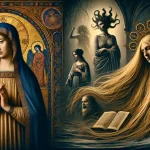
Mourning women—especially those with disheveled hair and open wailing—were often seen as portents of death. This is rooted in the belief that grief weakens the barrier between the living and the dead, allowing the widow to act as a medium between both realms.
💡 Examples:
- The Banshee (Ireland & Scotland)
- A spectral woman in mourning, often appearing as an old widow with long hair, who wails before a death.
- She embodies both grief and a warning of impending doom.
- Slavic Folklore – The Mourning Widow as an Omen
- Seeing a widow with unbound hair early in the morning was considered a bad omen—a sign that someone in the village would soon die.
- In some regions, encountering a mourning widow on the road meant misfortune or illness would follow.
Why?
- Mourning women embody transition (liminality), making them closer to the supernatural.
- Their wailing and disheveled state mimic ghosts and spirits, making people fear their presence.
2. Fear of the Widow’s Curse
In many societies, widows were seen as bringers of misfortune, whether intentionally or unintentionally. The belief was that a woman who had lost her husband was carrying death’s presence—and could bring it to others.
💡 Examples:
- Hindu Traditions (India & Nepal)
- Widows were often excluded from auspicious rituals (such as weddings) because they were thought to bring misfortune.
- Some even shaved their heads and wore white to symbolize their separation from life and fertility.
- Italian Folk Beliefs – The Widow’s Evil Eye
- A widow who stared at someone too long was believed to curse them with bad luck or even cause sickness.
- African & Middle Eastern Folklore – The “Black Widow” Curse
- A woman who had outlived multiple husbands was sometimes feared as having supernatural power over life and death.
- Some were accused of being witches who caused their husbands’ deaths through dark magic.
Why?
- A widow represents the force of death that took her husband.
- She challenges the natural life cycle, especially if she lives longer than expected.
- Mourning women often had less societal protection, making them easy scapegoats.
3. The Widow as a Witch or Revenant
Mourning women, especially those who refused to remarry or exhibited strange behavior, were often suspected of witchcraft or becoming revenants (undead beings).
💡 Examples:
- The Strzyga (Polish & Slavic Mythology)
- Women who died in mourning or were socially isolated in life could return as a Strzyga—a vampire-like creature that sucked the life force from others.
- Loose, long hair was a sign of a dangerous spirit.
- The Pontianak (Malay Folklore)
- A woman who died while pregnant or in great sorrow could return as a vengeful spirit, feeding on men.
- She is often depicted combing her long black hair, symbolizing both beauty and death.
- The La Llorona (Latin America)
- A woman who lost her children (or husband) and died in sorrow, becoming a wandering spirit who lures the living to a watery grave.
- Her weeping mirrors the cries of a grieving widow, turning sorrow into a supernatural curse.
Why?
- Women in mourning were seen as spiritually unclean, making them vulnerable to possession or transformation.
- Long, unbound hair—often associated with witches and the supernatural—was a marker of a woman outside normal society.
4. Mourning Women and Ritual Exclusions: Fear of the “Half-Dead”
In many cultures, mourning women were excluded from normal social or religious life because they were seen as contaminated by death.
💡 Examples:
- Jewish Traditions – The Mourner’s Isolation
- In Jewish traditions, mourners observe shiva (seven days of mourning) and are often isolated.
- Widows and mourners were discouraged from touching food, as their presence was believed to carry the “weight of death.”
- Slavic & Russian Traditions – The Widow’s Ritual Purification
- A widow was forbidden from entering churches or participating in festivals until she underwent a ritual cleansing.
- Sometimes, she had to bathe in running water or cut off a lock of her own hair to symbolically remove death’s grip.
Why?
- The widow was neither among the living nor fully among the dead.
- Her presence was feared to disrupt social harmony or bring unwanted spirits into the home.
5. The Widow’s Revenge: When Grief Turns into Power
While many mourning women were feared as passive omens or victims, some myths turn them into powerful supernatural figures who take revenge.
💡 Examples:
- The White Lady (European Folklore)
- Often the ghost of a widow or betrayed woman, haunting castles and crossroads.
- Appears in times of crisis or before disasters.
- Madame White Snake (Chinese Mythology)
- A woman who loses her love but returns as a supernatural entity to seek revenge.
- Her long, flowing white hair and sorrowful beauty give her both a ghostly and divine aura.
- The Black Widow Myth (Various Cultures)
- A widow whose husbands die mysteriously is feared as either a cursed woman or a secret killer.
- In some traditions, she is believed to have gained supernatural power from her loss.
Why?
- Widowhood was a form of power—a woman outside of traditional roles could control her own fate.
- Society often feared women who had nothing left to lose, believing they could turn grief into supernatural vengeance.
Conclusion: The Supernatural Widow as a Liminal Being
The widow, especially in mourning, has historically been both pitied and feared. In many cultures, she is seen as a liminal figure—neither fully in the world of the living nor the dead.
Key Themes in the Fear of Mourning Women:
| Theme | Examples | Cultural Meaning |
|---|---|---|
| Death as a Contagion | Hindu widow exclusions, Jewish mourner isolation | Fear that grief connects one too closely to death |
| Omen of Misfortune | Banshee wailing, Slavic widow encounters | Mourning women seen as harbingers of doom |
| Widow’s Curse | Italian “evil eye” widow, Black Widow myths | Fear that widows control life and death |
| Transformation into Revenants | Strzyga (Slavic vampire widow), La Llorona, Pontianak | Mourning women return as undead spirits |
| Social Isolation and Fear of Power | Widow’s hair-cutting rituals, exclusion from rituals | The widow as a dangerous outsider |
Ultimately, societies have long struggled with how to interpret the power of grief—whether as a dangerous force, an unnatural connection to the dead, or a supernatural power.
II. The Role of Letting Loose the Hair of a Mourning Widow in Folklore and Rituals
Letting loose the hair of a mourning widow is a powerful symbolic act in many cultures. It signifies grief, transition, vulnerability, social liminality, and detachment from past identity. Across different traditions, this act is connected to the ritual expression of loss and mourning, and it sometimes holds supernatural implications.
6. Hair as a Symbol of Social Status
In many cultures, a married woman’s hair is covered, braided, or styled in a specific way to indicate her social role as a wife. When her husband dies, loosening her hair marks a profound social and personal transformation.
💡 Key Symbolism:
- Braided or covered hair = Order, marriage, domesticity, stability.
- Unbound, loose hair = Disorder, grief, transition, loss of societal role.
Example: Slavic Folklore
- A married woman’s hair was traditionally braided and covered.
- After her husband’s death, she unbraided her hair as a sign of grief.
- This act symbolized her transition from wife to widow—a liminal status between marriage and social isolation.
7. Liminality: A State Between Life and Death
Widows often occupied a liminal space in society, neither fully part of the world of marriage nor completely independent.
a) Widowhood as a State of Ritual Pollution
- In many societies, death was seen as unclean, and those closest to the deceased (especially the widow) were considered ritually impure.
- Loose hair was a sign that the widow was in mourning and temporarily outside of normal social structure.
💡 Example: Hindu Mourning Rituals
- A Hindu widow lets down her hair and removes her ornaments after her husband’s death.
- In some traditions, she cuts her hair or shaves her head, marking the end of her married identity.
b) Loose Hair as an Expression of Uncontrolled Emotion
- Mourning rituals often included weeping, wailing, and pulling at one’s hair to physically express grief.
- Disheveled, loose hair was a sign of deep sorrow and emotional breakdown.
💡 Example: Ancient Greece & Rome
- Greek and Roman widows let down their hair and tore at it during funerals.
- This was an intensely emotional gesture, showing their grief and distress.
- Women in mourning were also seen as dangerous, as their sorrow could attract supernatural forces.
8. Hair and the Connection to the Dead
a) Loose Hair as an Offering to the Dead
- In some cultures, unbinding the hair symbolized giving part of oneself to the deceased.
- The widow’s hair could serve as a symbolic bridge between the living and the dead.
💡 Example: Slavic & Celtic Traditions
- Women mourning their husbands would leave strands of their hair on graves as an offering.
- This act symbolized their continued connection to the deceased.
b) Hair and the Risk of Becoming a Revenant
- Widows who failed to observe proper mourning rituals—especially those who kept their hair bound or refused to express grief—were sometimes believed to turn into restless spirits.
- Loose hair was seen as a temporary release of the soul’s attachment to the living world.
💡 Example: Rusalki & Other Female Revenants
- Many female spirits (Rusalki, Banshees, Yūrei) are depicted with loose, flowing hair.
- This connects them to unfulfilled transitions, similar to widows who are between two social states.
9. The Widow’s Transformation: From Wife to Outsider
a) Widowhood as a Socially Isolated Role
- In some cultures, a widow’s unbound hair reflected her new, isolated status.
- She was no longer part of her husband’s household but also not fully reintegrated into society.
💡 Example: Medieval & Early Modern Europe
- Widows often covered their loose hair with a black veil, marking their transition to a new identity.
- Some never remarried, remaining in a state of permanent mourning.
b) The End of Mourning: Binding the Hair Again
- Once mourning ended, a widow could bind her hair again, symbolizing her return to normal life.
- This could mark:
- Acceptance of her new role as an independent woman.
- The decision to remarry (if culturally acceptable).
💡 Example: Jewish Mourning Rituals
- In some Jewish traditions, widows let their hair down while sitting shiva (mourning period).
- After mourning, they would bind their hair again, signaling their re-entry into social life.
10. The Supernatural & Widowhood: Fear of the Mourning Woman
a) Loose-Haired Widows as Omens
- In some cultures, a widow with loose hair was considered a bad omen.
- Seeing a mourning widow with disheveled hair was thought to bring misfortune or death.
💡 Example: Slavic Folklore & The Banshee
- A widow with long, unbound hair could be mistaken for a Banshee or Rusalka.
- Her lamentations and loose hair made her resemble supernatural spirits.
b) Fear of the Widow’s Curse
- Some societies viewed widows as bringers of misfortune.
- Women who kept their hair loose too long after mourning were suspected of having a dangerous connection to the dead.
💡 Example: Indian & Middle Eastern Traditions
- In some parts of India, widows were discouraged from wearing their hair loose for too long.
- This was tied to superstitions that they could attract spirits or misfortune.
Conclusion: The Power of Letting Hair Down in Mourning
Letting loose the hair of a mourning widow is a deeply symbolic and culturally significant act that:
- Marks her transition from wife to widow.
- Symbolizes grief and emotional intensity.
- Places her in a liminal space, between the living and the dead.
- Expresses her vulnerability and social isolation.
- Connects her to supernatural forces, both protective and dangerous.